

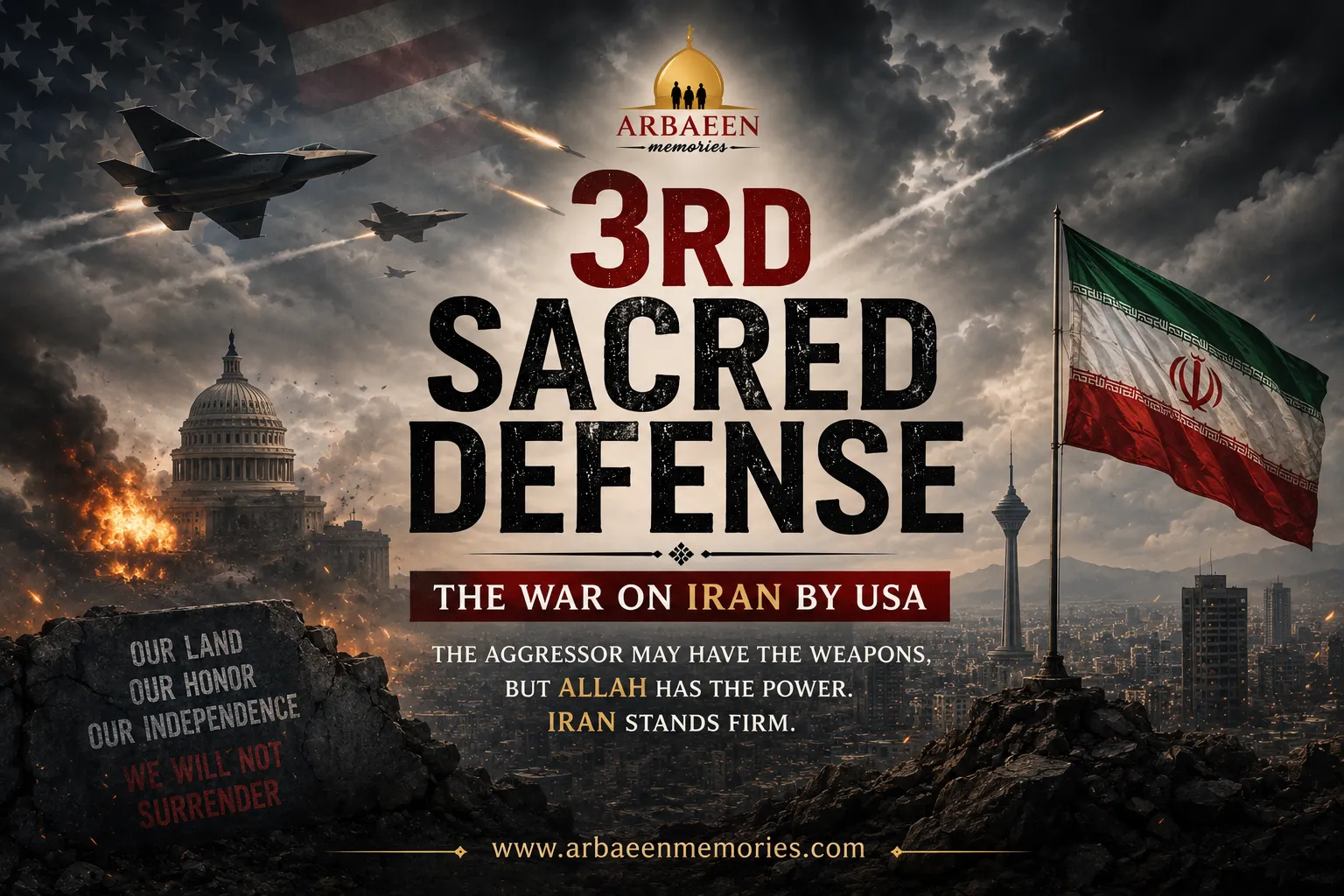
Throughout modern Iranian history, there have been moments when the nation faced challenges that tested not only its military strength but also its faith, unity, and determination.
Many Iranians refer to the Iran–Iraq War as the First Sacred Defense. During this period, the country defended its sovereignty against invasion despite immense hardship. Years later, regional struggles against terrorism and extremism became known by many as the Second Sacred Defense.
For supporters of the Islamic Revolution, the recent confrontation involving Iran has come to be viewed as the Third Sacred Defense.
A Different Kind of Conflict
This conflict was unlike previous wars. It was not fought solely on battlefields. Instead, it unfolded through sanctions, cyber operations, economic pressure, media campaigns, political isolation, and eventually direct military confrontation.
As a result, it represented the culmination of decades of pressure aimed at weakening Iran’s independence and influence.
Many believed that years of sanctions and economic hardship had left Iran vulnerable. However, when the challenge came, the nation demonstrated an ability to endure under extraordinary pressure.
Military facilities were targeted. Infrastructure was attacked. Threats intensified. Despite these difficulties, the country continued to function, respond, and adapt.
For many Iranians, this was not simply a military struggle. Rather, it was a defense of sovereignty, dignity, and the right of a nation to determine its own future without external coercion.
Therefore, the conflict became about more than borders or politics. It became a test of national resolve.
The Role of the People
One of the defining features of the Third Sacred Defense was the role of ordinary people.
Scientists continued their research. Engineers maintained critical infrastructure. Medical professionals cared for the wounded. Meanwhile, families endured uncertainty while supporting national resilience.
The conflict reminded many that a nation’s strength is built not only by soldiers but also by the collective determination of its people.
Faith as a Source of Strength
Supporters of the Islamic Revolution often point to a deeper source of strength. They argue that Iran’s resilience cannot be explained solely through military capabilities or strategic planning.
Instead, they believe the foundation lies in faith—faith in Allah (SWT), faith in justice, and faith in the principles that inspired the Islamic Revolution.
This perspective draws heavily from the lessons of Karbala. Imam Hussain (A.S.) taught that success is not measured only by material victory. True success lies in remaining steadfast upon truth, even when facing overwhelming odds.
His sacrifice transformed Karbala into a timeless symbol of resistance, patience, and dignity.
Lessons of Perseverance
For many, the Third Sacred Defense reflected this same spirit. It was viewed as another chapter in a long struggle between pressure and perseverance, intimidation and conviction.
Furthermore, the conflict reinforced the belief that military power alone cannot break a people whose strength comes from faith and purpose.
The experience also highlighted Iran’s achievements despite decades of sanctions. Advances in science, technology, defense, medicine, and industry demonstrated how adversity can become a catalyst for self-reliance and innovation.
In many ways, what was intended to weaken the nation strengthened its determination to develop independent capabilities.
Legacy of the Third Sacred Defense
The Third Sacred Defense is therefore remembered by many not simply as a conflict, but as a test of endurance.
It is seen as a period when a nation confronted immense pressure and chose resilience over surrender.
Its legacy is not measured only by military outcomes. Instead, it is measured by the lessons it left behind: that faith can inspire courage, that unity can overcome hardship, and that a people determined to defend their principles can withstand even the greatest challenges.
For those who lived through it, the Third Sacred Defense became another reminder of a timeless truth:
Nations may possess weapons, economies, and armies.
But the strongest defense has always been belief