

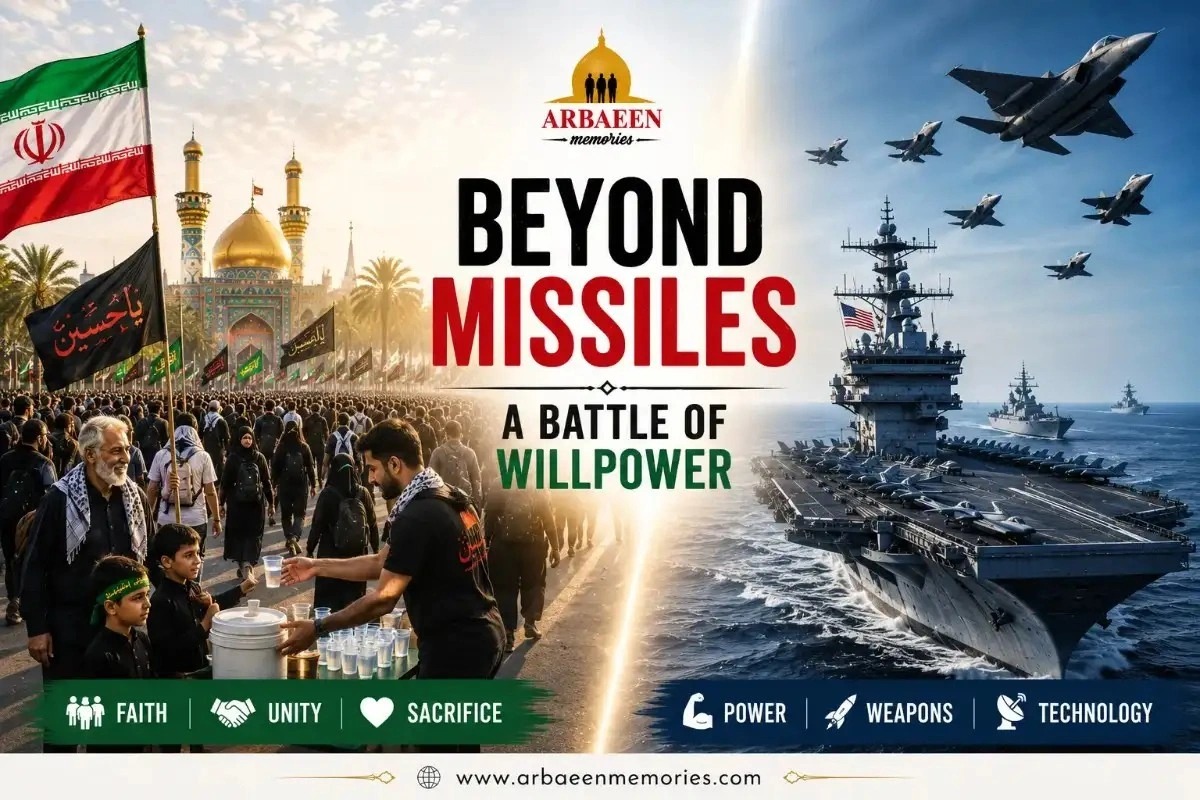
Wars are often measured by the number of missiles launched, aircraft deployed, and targets destroyed.
Military analysts examine:
- Technology
- Firepower
- Battlefield tactics
to determine who possesses the advantage.
Yet history repeatedly proves that the outcome of conflicts is not decided by weapons alone.
Behind every war lies another battlefield — the battlefield of willpower.
More Than a Military Conflict
The recent conflict involving Iran demonstrated this reality in a powerful way.
While headlines focused on:
- Missiles
- Air defenses
- Military strikes
- Strategic targets
a deeper struggle was unfolding.
It was a contest between:
- Pressure and perseverance
- Intimidation and determination
Decades of Pressure and Adaptation
For decades, Iran had lived under:
- Sanctions
- Economic restrictions
- Diplomatic pressure
- Military threats
Many expected these challenges to weaken the nation’s resolve.
Instead, they forced the country to adapt.
The Growth of Self-Reliance
As pressure increased:
- Industries learned to innovate with limited resources.
- Scientists developed domestic solutions.
- Engineers built local capabilities.
- Universities continued producing researchers and specialists despite obstacles.
By the time conflict erupted, Iran was no stranger to pressure.
A Test of Endurance
The war therefore became more than a military confrontation.
It became a test of whether a nation that had endured decades of isolation could continue standing against some of the world’s most powerful military forces.
Many expected overwhelming technological superiority to produce a rapid outcome.
Yet the conflict showed that resilience can be just as important as advanced weaponry.
Strength Under Pressure
Throughout the confrontation, Iran continued to operate despite attacks on military facilities, infrastructure, and strategic assets.
The ability to absorb pressure while maintaining operational capability became one of the defining characteristics of the conflict.
Rather than focusing solely on immediate responses, the country demonstrated patience and endurance.
The Power of Resilience
This endurance was rooted in more than military planning.
It reflected a national mindset shaped by years of hardship and self-reliance.
A society that has repeatedly faced challenges often develops a unique ability to adapt.
Over time:
- Difficulties that might discourage others become part of everyday life.
- Adaptation becomes routine.
- Resilience becomes a national strength.
Belief and Purpose
The conflict also highlighted the role of belief and purpose.
For many Iranians, the struggle was not viewed simply as a military engagement but as a defense of independence and sovereignty.
This perception created a sense of unity that extended beyond military institutions.
The broader effort included:
- Citizens
- Scientists
- Engineers
- Ordinary families
All saw themselves as participants in a common effort to withstand pressure.
The Limits of Military Power
Observers around the world were reminded that military power has limits.
- Aircraft can strike targets.
- Missiles can damage infrastructure.
- Sanctions can affect economies.
However, determination is far more difficult to break.
The willingness of a population to endure hardship often becomes one of the most important factors in any long-term conflict.
The Lesson of Karbala
Many supporters of Iran compared this spirit to lessons drawn from Islamic history, particularly the stand of Imam Hussain (A.S.) in Karbala.
His sacrifice demonstrated that success is not always measured by:
- Numbers
- Material power
- Military strength
Sometimes victory lies in remaining steadfast upon one’s principles despite overwhelming odds.
Beyond Missiles and Headlines
That is why the story of this conflict extends far beyond missiles and military technology.
It is ultimately:
- A story about endurance.
- A story about resilience.
- A story about conviction under pressure.
It is about a nation’s ability to withstand pressure without abandoning its convictions.
It is about resilience overcoming expectations.
The Real Battlefield
Beyond missiles, beyond headlines, and beyond the battlefield itself, the conflict revealed a deeper truth:
While weapons may shape wars, it is often willpower that shapes history.
And when the test came, the battle was not only about military strength—it was a battle of willpower.