

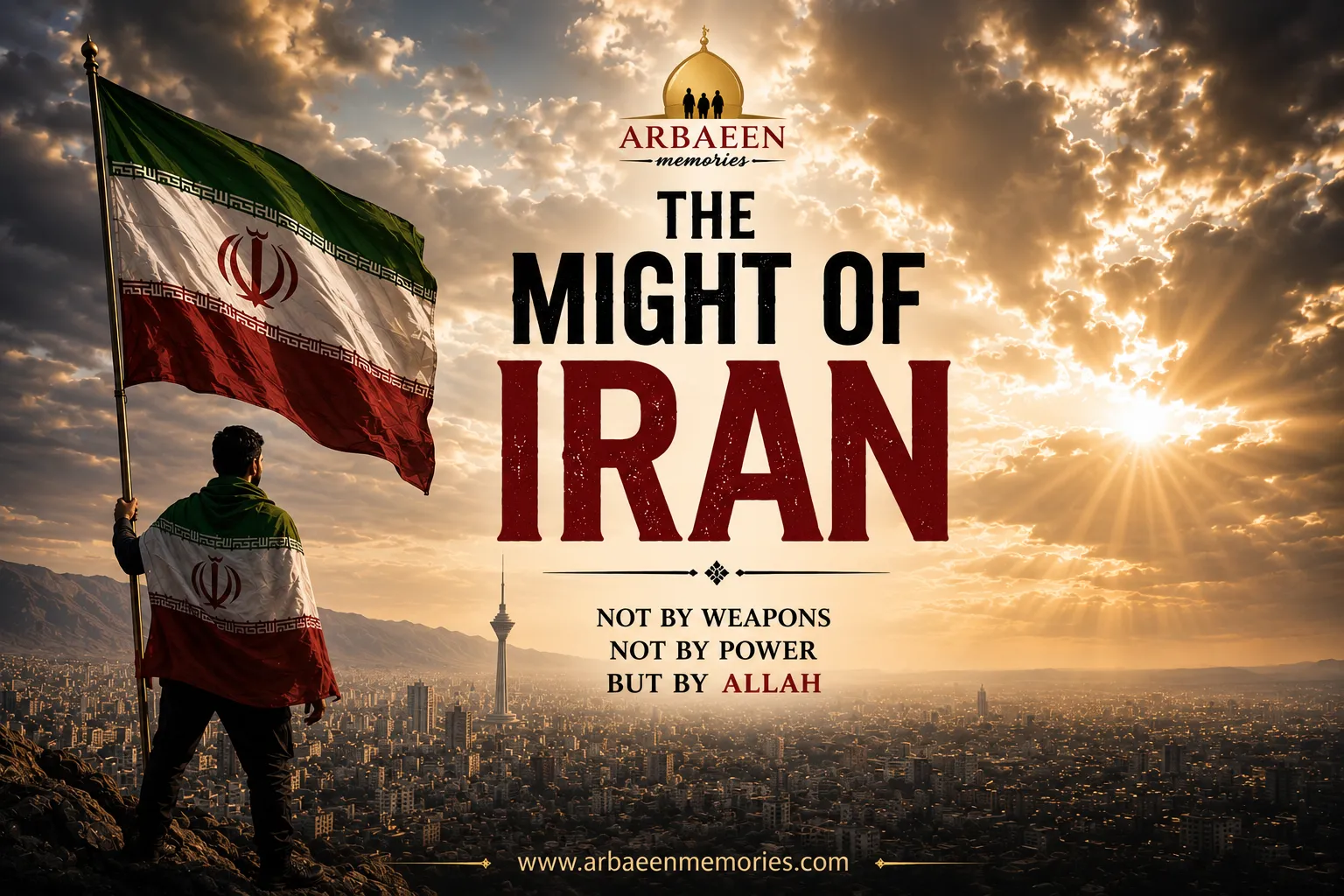
For more than four decades, Iran has faced sanctions, political pressure, economic restrictions, military threats, and international isolation. Many predicted that such pressure would weaken the nation and halt its progress.
Yet despite these challenges, Iran continued to develop its scientific, technological, industrial, and defense capabilities. As a result, it became one of the most resilient nations in the region.
The might of Iran is not measured only by military strength. It is also measured by its ability to endure.
Scientific and Technological Development
While sanctions restricted access to global markets and technology, Iran invested heavily in education, research, engineering, medicine, and innovation.
As a result, the country built domestic capabilities in biotechnology, pharmaceuticals, nanotechnology, aerospace, and advanced manufacturing. Multiple studies note that Iran continued to make significant scientific and technological progress despite decades of sanctions and isolation.
Iran’s scientific growth has been particularly remarkable. The country expanded higher education, increased scientific research output, developed space-launch capabilities, advanced medical research, and established thousands of knowledge-based companies.
Moreover, Iranian scientists achieved internationally recognized work in nanotechnology, stem-cell research, biotechnology, engineering, and medicine.
Growth of the Defense Sector
The defense sector tells a similar story. Years of sanctions forced Iran to develop indigenous technologies rather than depend on foreign suppliers.
Over time, this led to domestic production of missiles, drones, radar systems, naval capabilities, and advanced defense technologies. Analysts note that sanctions often accelerated efforts toward self-sufficiency and local innovation.
The Power of Resilience
Yet the true story of Iran is not simply about technology.
It is about resilience.
The Iranian people endured economic hardship, inflation, and restrictions that affected nearly every aspect of life. Research has shown that sanctions imposed significant costs on Iran’s economy and society.
Despite these difficulties, the country continued investing in education, science, infrastructure, and strategic industries.
Faith and Perseverance
For many supporters of the Islamic Revolution, this resilience is rooted in faith. They believe that the nation’s strength comes not merely from weapons or technology.
Instead, they believe that dignity is more valuable than surrender and that perseverance is stronger than pressure.
This belief draws inspiration from Islamic history.
At Karbala, Imam Hussain (A.S.) demonstrated that numbers and material power do not determine truth.
At Khandaq, Imam Ali (A.S.) showed that courage can overcome overwhelming odds.
These lessons continue to inspire millions who view resistance as a moral principle rather than a military strategy.
A Quranic Perspective
The Holy Quran reminds believers:
“And prepare against them whatever you are able of power.” (Quran 8:60)
For many, Iran’s achievements in science, technology, defense, and education represent an effort to fulfill this principle through self-reliance and preparation.
The Might of Iran
The Might of Iran is therefore not simply the story of missiles, military capabilities, or strategic influence.
It is the story of a nation that refused to be defined by sanctions.
It is the story of scientists who continued innovating under restrictions.
It is the story of engineers who built when others expected failure.
It is the story of a people who endured pressure yet continued moving forward.
And for many believers, it is ultimately a reminder that while nations possess strength, the true source of power, resilience, and victory belongs to Allah (SWT) alone.