

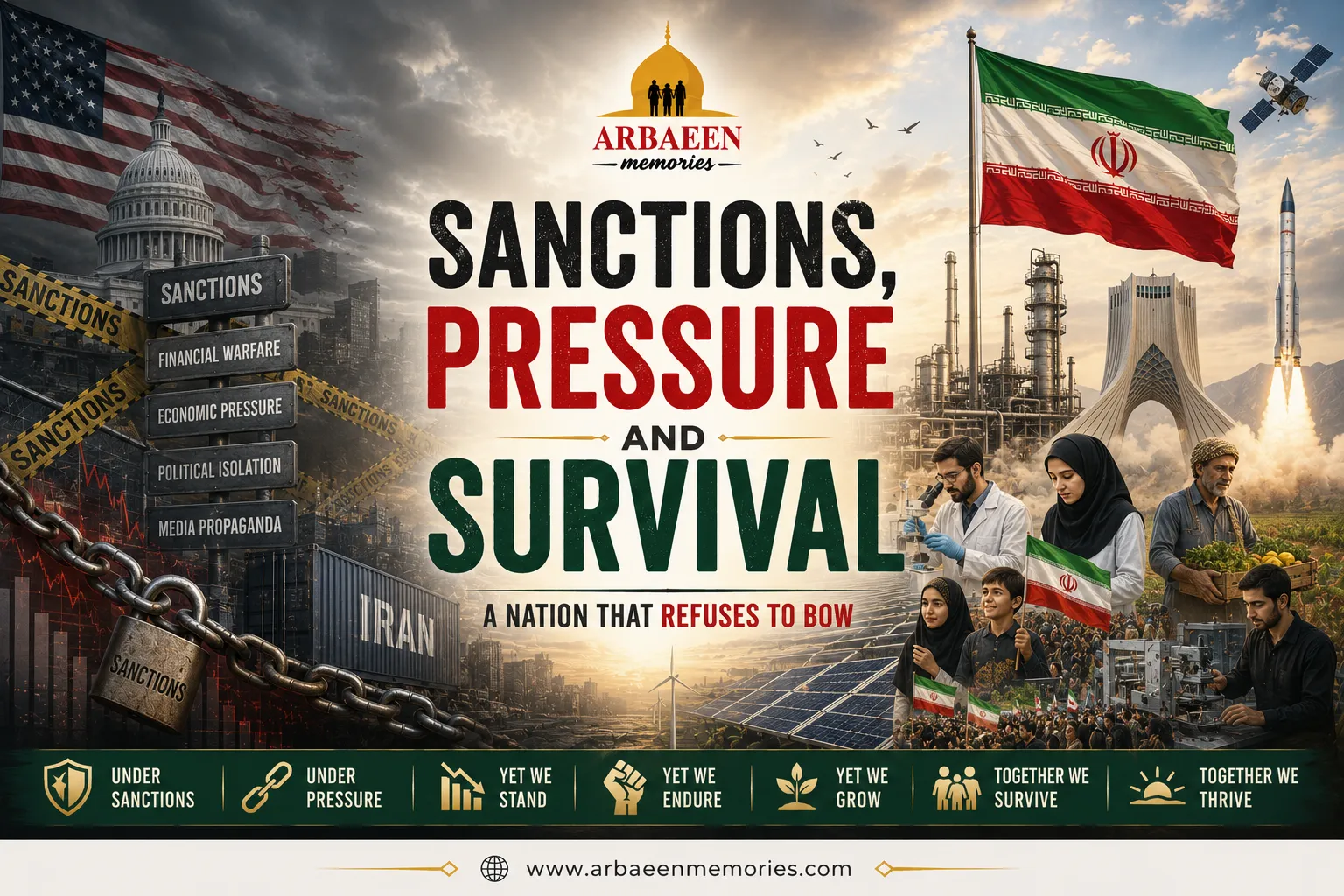
Sanctions, Pressure and Survival
For more than four decades, Iran has lived under a level of economic and political pressure that few nations have experienced in modern history.
Waves of sanctions targeted its:
- Banking system
- Oil exports
- International trade
- Technology access
- Financial networks
Many believed these measures would eventually force the country to abandon its policies or collapse under economic strain.
Yet Iran’s story became one of survival.
The Objective of Sanctions
The objective of sanctions was clear:
- Weaken the economy
- Reduce national capabilities
- Increase pressure on the government
Combined with diplomatic isolation, cyber attacks, military threats, and regional tensions, the pressure campaign was designed to make resistance unsustainable.
But history often produces unexpected outcomes.
Adaptation Through Necessity
Instead of disappearing, many industries adapted.
Unable to rely on foreign suppliers, local engineers, scientists, and entrepreneurs began developing domestic alternatives. Universities increased research efforts. Technology companies emerged. Manufacturing sectors expanded their local capabilities.
Necessity became the mother of innovation.
The Human Cost of Pressure
The Iranian people paid a heavy price.
Economic hardship affected ordinary families, inflation created challenges, and international restrictions complicated daily life. Yet despite these difficulties, society continued to function, adapt, and move forward.
Over time, survival itself became a national achievement.
Beyond Economic Challenges
The pressure did not stop at economics.
Military threats remained constant. Assassinations of scientists, cyber operations, and repeated warnings of military action created an environment where uncertainty became part of everyday reality.
Yet rather than creating surrender, these challenges often strengthened the belief that independence required endurance.
The Power of Conviction
Supporters of Iran frequently point to an important lesson: nations do not survive on resources alone.
They survive through:
- Determination
- Unity
- Belief in a greater purpose
Oil fields can be sanctioned. Trade routes can be restricted. Financial systems can be targeted. But conviction is far more difficult to blockade.
Resilience During Conflict
This mindset became particularly visible during periods of conflict.
When military pressure was added to economic pressure, many expected the accumulated weight of decades of sanctions and isolation to produce collapse. Instead, Iran demonstrated an ability to continue operating under extraordinary circumstances.
The story is not simply about government policies or military capabilities. It is also about:
- Teachers who continued educating students
- Scientists who continued researching
- Engineers who continued building
- Families who continued hoping despite difficulties
National resilience is ultimately built by ordinary people who refuse to give up.
Faith and Endurance
For many supporters of the Islamic Revolution, this resilience is deeply connected to faith.
They believe that patience during hardship is not weakness but strength. Islamic history is filled with examples of communities facing overwhelming challenges yet remaining steadfast because of their trust in Allah (SWT).
A Quranic Reminder
The Holy Quran reminds believers:
“Indeed, with hardship comes ease.” (Quran 94:6)
This belief helped many people view sanctions and pressure not merely as obstacles, but as tests of endurance.
A Story of Survival
Today, whether one agrees with Iran’s policies or not, few can deny the country’s ability to survive under conditions that many nations would find extremely difficult.
Decades of sanctions, pressure, and isolation did not eliminate the nation. Instead, they became part of a story of adaptation and resilience.
Sanctions, Pressure and Survival is therefore more than a political story.
It is:
- The story of a people who learned to endure
- The story of resilience under hardship
- The story of determination under pressure
- The story of faith during uncertainty
When Survival Becomes Victory
Because sometimes survival itself becomes a victory.