

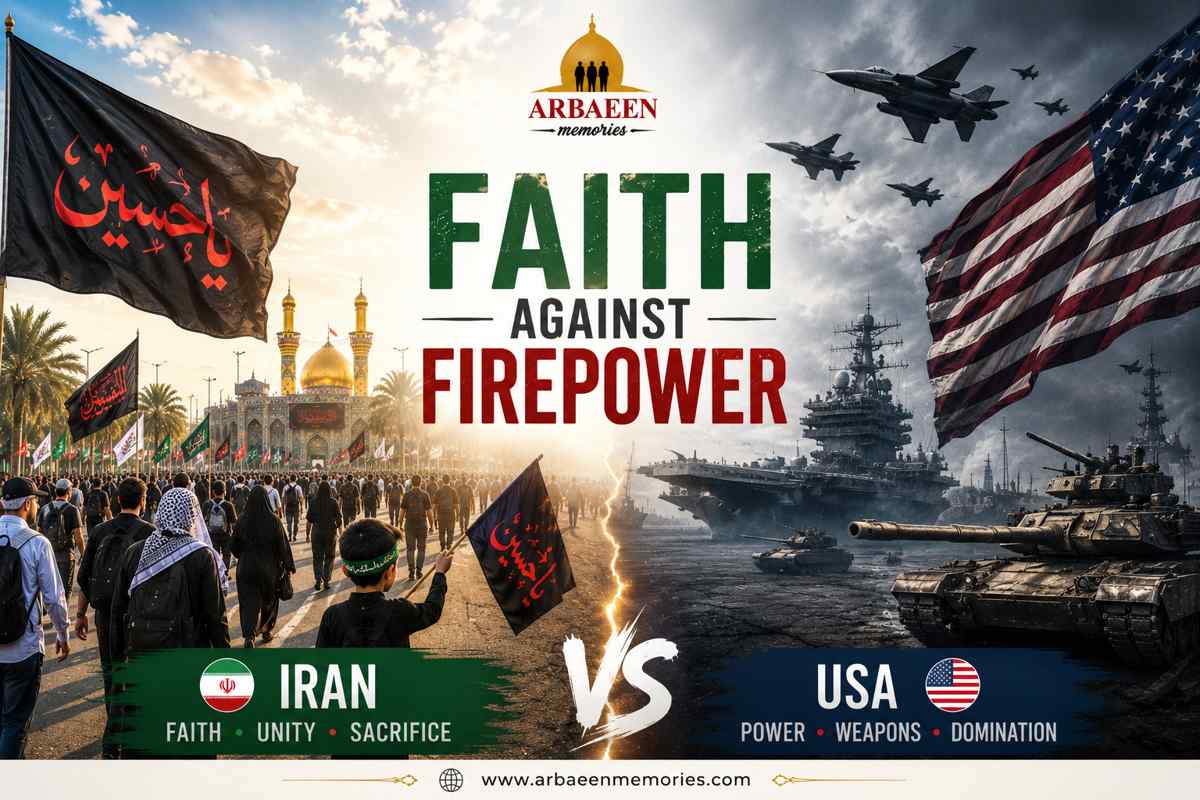
History has often shown that military power alone cannot guarantee victory.
Nations may possess:
- Advanced weapons
- Powerful armies
- Vast resources
However, when confronted by a people driven by faith, conviction, and resilience, the outcome is not always determined by firepower alone.
A Conflict That Challenged Expectations
The recent 12-day war became a powerful example of this reality.
Many expected that Iran, after decades of:
- Sanctions
- Economic pressure
- Political isolation
- Military threats
would quickly succumb to the combined strength of the United States and its allies.
Instead, the conflict demonstrated something different: the strength of a nation whose people viewed resistance not merely as a military strategy, but as a matter of belief and identity.
Four Decades of Pressure
For more than forty years, Iran has faced continuous pressure.
Severe sanctions targeted its economy, restrictions limited access to technology and international markets, and repeated threats sought to weaken its position.
Yet despite these challenges, Iran continued to invest in:
- Education
- Science
- Technology
- Industry
- Defense
The country developed indigenous capabilities in fields ranging from medicine and nanotechnology to missile production and aerospace research.
Resilience During War
When war came, the expectation among many analysts was that overwhelming military superiority would produce a swift outcome.
However, Iran demonstrated an ability to:
- Absorb pressure
- Maintain operations
- Continue responding throughout the conflict
Reports indicated that Iranian forces were able to sustain retaliatory capabilities and impose costs on their adversaries despite extensive attacks.
More Than Military Technology
The conflict highlighted an important lesson: modern wars are not won solely through advanced aircraft, precision missiles, or technological superiority.
Other factors play critical roles, including:
- Endurance
- Morale
- Organization
- National determination
Iran’s strategy focused on resilience, maintaining command structures, preserving critical capabilities, and continuing operations even after sustaining significant damage.
Resistance and Faith
For many supporters of Iran, the war became a symbol of faith standing against overwhelming force.
They viewed the conflict through the lens of resistance—the belief that dignity and independence are worth defending regardless of the challenges.
This mindset drew inspiration from Islamic history, particularly the example of Imam Hussain (A.S.), who stood against a vastly larger force at Karbala while refusing to compromise his principles.
The Meaning of “Faith Against Firepower”
The phrase “Faith Against Firepower” therefore represents more than a military confrontation.
It reflects the idea that conviction can sustain a nation through hardship.
It also explains how a country subjected to decades of sanctions continued to:
- Build scientific institutions
- Develop domestic industries
- Maintain strategic capabilities
despite immense external pressure.
Acknowledging Resilience
Even critics of Iran acknowledge the country’s resilience.
Various analyses have noted its ability to:
- Adapt to sanctions
- Rebuild capabilities
- Maintain strategic endurance
despite repeated attempts to weaken it.
The Real Story of the Conflict
The story of the war is therefore not simply about:
- Missiles
- Aircraft
- Military operations
It is about determination in the face of adversity.
It is about a nation that refused to collapse under pressure and a people who believed that perseverance was itself a form of victory.
The Lasting Lesson
In the end, firepower may destroy buildings and infrastructure, but faith, resilience, and conviction are far more difficult to defeat.