

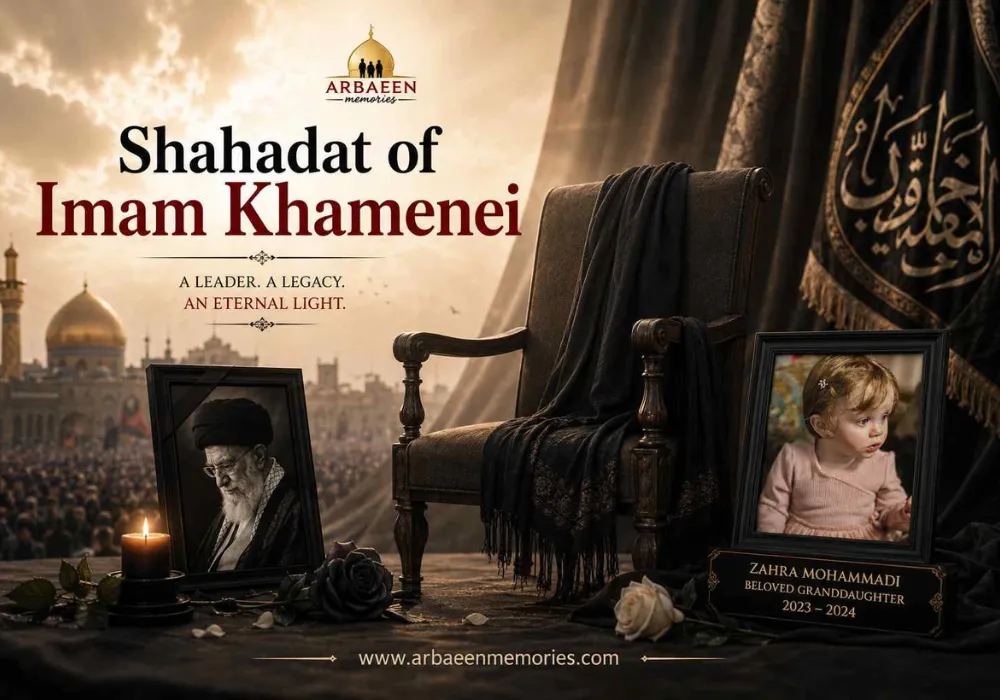
The shahadat of Ayatollah Ali Khamenei during the Iran conflict became one of the most emotional and defining moments in modern Middle Eastern history. According to multiple international and regional reports, Iran’s Supreme Leader was killed during joint US-Israeli strikes targeting senior Iranian leadership. For many across the Muslim world, his death was not seen merely as the loss of a political leader, but as the shahadat of a man who refused to surrender under pressure.
Following the Path of Karbala
Imam Khamenei followed in the footsteps of his forefather, Imam Hussain (A.S.), who stood on the plains of Karbala against tyranny and injustice more than 1400 years ago. Imam Hussain (A.S.) chose sacrifice over humiliation and refused to bow before Yazid despite overwhelming military pressure. In the eyes of many followers, Imam Khamenei represented a similar spirit of resistance — standing firm against powerful nations rather than accepting conditions imposed through threats and war.
Iran’s Resistance Under Pressure
For years, Iran faced sanctions, political isolation, military threats, and economic pressure from the United States and its allies. Yet Iran continued to reject demands it believed would compromise its sovereignty and independence. Even during the war, Iranian leadership maintained that dignity and resistance were more important than surrender.
The image of a leader refusing to bend before global pressure deeply resonated with those who saw the conflict as more than politics. To them, it became a battle between resistance and submission. Imam Khamenei’s supporters believed he accepted the possibility of martyrdom long before the war escalated. His speeches over the years frequently emphasized sacrifice, steadfastness, and standing against oppression regardless of consequences.
The Connection Between Karbala and Modern Resistance
The comparison with Karbala became stronger after his death. Just as Imam Hussain (A.S.) and his family faced overwhelming forces yet remained firm upon their principles, many viewed Imam Khamenei’s final days as a continuation of that spirit. The message was clear: power and weapons may destroy lives, but they cannot destroy belief or resistance.
The war itself changed perceptions across the region. Despite the military strength of the United States and Israel, Iran continued to resist and retaliate throughout the conflict. Supporters argued that this proved modern power is not only measured by advanced weapons, but also by resilience, ideology, and the willingness to sacrifice.
Impact Across the Muslim World
For many people across the Muslim world, especially those inspired by the message of Karbala, the shahadat of Imam Khamenei became symbolic of standing firm against oppression regardless of the cost. Mourning gatherings, speeches, and tributes reflected this emotional connection between Karbala and modern resistance movements.
Whether viewed politically, spiritually, or historically, the event left a major impact on the region. It reminded many of a lesson deeply rooted in Islamic history: true victory is not always survival, but remaining firm upon one’s principles even in the face of overwhelming power.
The Timeless Message of Sacrifice
From Karbala to modern times, the message continues to inspire millions — that dignity, resistance, and sacrifice can never be defeated by fear.